
Comprehensive Nursing Care Plan
Creating Comprehensive Nursing Care Plans That Meet Academic and Clinical Standards
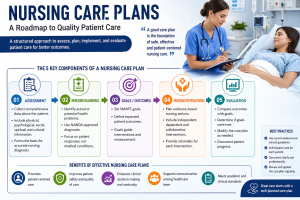
Nursing Care Plans are essential tools that guide patient-centered care and support clinical decision-making. They provide a structured framework for assessing patient needs, identifying health concerns, setting measurable goals, implementing interventions, and evaluating outcomes. In nursing education, care plans are equally important because they demonstrate a student’s ability to apply theoretical knowledge to real-world clinical situations.
Developing high-quality Nursing Care Plans requires critical thinking, evidence-based practice, and a clear understanding of patient care priorities. Whether for academic assignments or clinical placements, a well-developed care plan reflects professional nursing standards and contributes to improved patient outcomes. Students often seek Nursing Assignment Help to strengthen their care planning skills and ensure their assignments meet institutional expectations.
Key Components of Effective Nursing Care Plans
Creating comprehensive Nursing Care Plans involves several interconnected components. Each section must be completed accurately and logically to ensure the plan aligns with academic and clinical requirements.
The core elements include:
- Comprehensive patient assessment
- Nursing diagnosis identification
- Goal and outcome development
- Evidence-based nursing interventions
- Rationales for interventions
- Evaluation of patient outcomes
A thorough assessment serves as the foundation of the entire care plan. Nurses collect subjective and objective data, including medical history, symptoms, laboratory findings, and physical examination results. This information helps identify actual and potential health problems that require nursing intervention.
Conducting Accurate Patient Assessments
A successful care plan begins with a detailed patient assessment. This stage involves gathering relevant information to understand the patient’s physical, psychological, social, and emotional needs.
When developing Nursing Care Plans, students should focus on:
- Vital signs and physical observations
- Patient complaints and symptoms
- Medical and surgical history
- Medication usage
- Lifestyle and environmental factors
- Psychosocial considerations
Accurate assessment data enables nursing students to make informed clinical judgments and develop targeted interventions. In Nursing Assignment Writing, assessment findings should be presented clearly and supported by clinical evidence whenever possible.
Formulating Appropriate Nursing Diagnoses
After collecting assessment data, the next step is identifying nursing diagnoses. A nursing diagnosis differs from a medical diagnosis because it focuses on the patient’s response to health conditions rather than the disease itself.
Strong nursing diagnoses should be:
- Evidence-based
- Patient-centered
- Specific and measurable
- Relevant to assessment findings
Examples include impaired mobility, acute pain, risk for infection, ineffective breathing patterns, and anxiety. Selecting accurate diagnoses demonstrates clinical reasoning and is a critical requirement in Nursing Assignment Writing services designed to support academic success.
A well-formulated nursing diagnosis provides direction for the remainder of the care plan and ensures interventions address the patient’s most pressing needs.
Setting Realistic Goals and Expected Outcomes
Goals and expected outcomes are vital elements of Nursing Care Plans because they establish the desired results of nursing interventions. Effective goals should follow the SMART framework:
- Specific
- Measurable
- Achievable
- Relevant
- Time-bound
For example, instead of writing “patient will improve,” a stronger goal would be “patient will report pain levels below 3 out of 10 within 48 hours of intervention.”
Clearly defined outcomes help healthcare professionals evaluate patient progress and determine whether nursing interventions are effective. Academic instructors also assess the quality of care plans based on the relevance and measurability of established goals.
Implementing Evidence-Based Nursing Interventions
Nursing interventions are the actions nurses perform to achieve established goals and improve patient outcomes. These interventions should be grounded in current research, clinical guidelines, and professional nursing standards.
Common categories of nursing interventions include:
- Assessment interventions
- Therapeutic interventions
- Educational interventions
- Preventive interventions
- Collaborative interventions
Each intervention should be accompanied by a rationale explaining why the action is necessary. Rationales demonstrate critical thinking and show how nursing actions contribute to patient recovery and well-being.
Students who struggle with intervention selection often benefit from a Nursing Assignment assistant that provides guidance on evidence-based practices and proper care plan structure.
Evaluating Patient Outcomes Effectively
Evaluation is the final stage of care plan development and determines whether patient goals have been achieved. This step requires nurses to compare actual outcomes with expected outcomes and make adjustments when necessary.
Effective evaluation involves:
- Reviewing patient progress
- Assessing intervention effectiveness
- Identifying barriers to recovery
- Modifying care plans when required
- Documenting findings accurately
Evaluation demonstrates the dynamic nature of Nursing Care Plans and highlights the importance of continuous patient monitoring. Academic care plans should clearly explain how outcomes will be measured and assessed over time.
Common Challenges in Nursing Care Plan Development
Many nursing students encounter difficulties when creating comprehensive care plans. These challenges often affect assignment quality and academic performance.
Common obstacles include:
- Limited understanding of nursing diagnoses
- Difficulty linking assessments to interventions
- Inadequate clinical reasoning skills
- Poor documentation practices
- Lack of evidence-based references
Addressing these challenges requires consistent practice, clinical exposure, and access to reliable learning resources. Professional Nursing Assignment Help can provide valuable support for students seeking to improve their care planning abilities and achieve better academic results.
Best Practices for Academic and Clinical Success
To create Nursing Care Plans that meet both academic and clinical standards, students should follow established best practices throughout the planning process.
Recommended strategies include:
- Use current evidence-based literature
- Follow institutional guidelines carefully
- Prioritize patient-centered care
- Maintain clear and professional documentation
- Support interventions with strong rationales
- Review and revise plans regularly
Additionally, students should ensure their work demonstrates critical thinking rather than simply listing interventions. High-quality Nursing Assignment Writing reflects a deep understanding of patient needs, clinical priorities, and professional nursing responsibilities.
Conclusion
Developing effective Nursing Care Plans is a fundamental skill that bridges classroom learning and clinical practice. Comprehensive care plans support safe, patient-centered care while demonstrating a nursing student’s ability to assess, diagnose, plan, implement, and evaluate healthcare interventions. By conducting detailed assessments, formulating accurate nursing diagnoses, establishing measurable goals, implementing evidence-based interventions, and evaluating outcomes, students can create care plans that meet academic and clinical standards. For those seeking additional support, Nursing Assignment Writing services, a Nursing Assignment assistant, and professional Nursing Assignment Help can provide valuable guidance in mastering care plan development and achieving academic excellence in nursing education.