
Patient care does not end when someone leaves the hospital. In fact, one of the most important stages of healthcare begins at discharge. This is where a well-developed care plan becomes essential.
A structured developing care plan ensures that patients transition safely from hospital to home or another care facility, reducing complications, preventing readmission, and improving recovery outcomes. This article explains everything about patient discharge, its types, processes, and how a strong care plan supports better health results.
What is Patient Discharge?
Patient discharge is the process where a patient is officially released from a hospital after receiving treatment and being medically cleared to continue recovery at home or another care facility.
It includes more than just leaving the hospital. A proper discharge involves:
- Medical clearance by a healthcare professional
- A written treatment and recovery plan
- Medication instructions and prescriptions
- Follow-up appointments
- A detailed discharge summary shared with healthcare providers
In simple terms, patient discharge is a planned and safe transition from hospital care to home care.
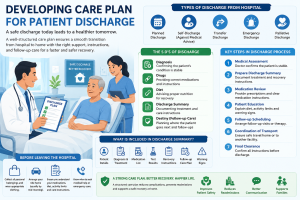
Types of Discharge from Hospital
Understanding the types of discharge in hospital is important for both patients and caregivers. Discharge is not always the same for every patient.
1. Planned Discharge
This happens when a patient completes treatment successfully and is medically fit to leave. It is the most common type.
2. Self-Discharge (Against Medical Advice)
A patient chooses to leave before doctors recommend it. This can be risky because treatment may not be complete.
3. Transfer Discharge
The patient is moved to another healthcare facility for specialized care or long-term treatment.
4. Emergency Discharge
In rare cases, discharge may happen quickly due to urgent hospital situations or external emergencies.
5. Palliative Discharge
For patients with serious or terminal illness, discharge may focus on comfort care at home or hospice.
Each type of discharge requires careful planning to avoid health complications.
The 5 D’s of Discharge (Important Concept)
The 5 D’s of discharge help healthcare providers ensure a smooth transition:
- Diagnosis – Confirming the patient’s condition is stable
- Drugs – Providing correct medications and instructions
- Diet – Advising proper nutrition for recovery
- Discharge Summary – Documenting treatment and care instructions
- Destiny (Follow-up Care) – Planning where the patient goes next and follow-ups
These five steps ensure nothing is missed during discharge planning.
Discharge Planning and Care Plan Development
A strong developing care plan begins early in the hospital stay. Discharge planning is not done at the last minute; it starts as soon as the patient is admitted.
Key Elements of Discharge Planning:
- Predicting discharge date early
- Discussing recovery needs with patient and family
- Arranging home care or rehabilitation if needed
- Planning follow-up visits and therapy sessions
- Ensuring medication safety and understanding
This is where a structured care plan development system becomes valuable. It helps healthcare teams organize all discharge steps in one place and ensures nothing is forgotten.
Steps in Patient Discharge Process
A safe discharge process follows structured steps:
1. Medical Assessment
Doctors confirm the patient is stable and ready to leave.
2. Preparation of Discharge Summary
A detailed document is created showing diagnosis, treatment, and recovery instructions.
3. Medication Review
Patients receive prescriptions and clear instructions on how to take them.
4. Patient Education
Healthcare providers explain diet, activity limits, and warning signs.
5. Follow-up Scheduling
Appointments are arranged for review or therapy.
6. Coordination of Transport
Patients arrange safe transport home or to another facility.
7. Final Clearance
All instructions are confirmed before leaving the hospital.
Types of Information in a Patient Discharge Summary
A patient discharge summary is one of the most important medical documents. It includes:
- Patient details
- Diagnosis and treatment received
- Medication list
- Test results
- Recovery instructions
- Follow-up care plan
- Emergency warning signs
This document ensures continuity of care between hospital doctors and home caregivers.
Purpose of Discharge in Hospital
The purpose of discharge from hospital is not just to free up beds. It is mainly to ensure:
- Safe continuation of care outside the hospital
- Reduced risk of complications or readmission
- Clear communication between healthcare providers
- Patient independence and recovery at home
- Proper medication and treatment adherence
A well-managed discharge improves overall healthcare outcomes significantly.
Why a Developing Care Plan is Important
A modern healthcare system depends heavily on structured planning tools. A developing care plan improves discharge efficiency in several ways:
✔ Improves Patient Safety
Ensures patients understand medications and recovery steps clearly.
✔ Reduces Hospital Readmissions
Proper follow-up and care reduce the chance of returning due to complications.
✔ Enhances Communication
Keeps doctors, nurses, and caregivers aligned on the same care instructions.
✔ Supports Families
Helps family members understand how to care for the patient at home.
✔ Organizes Healthcare Workflow
Hospitals can manage patient discharge processes more efficiently.
Before Leaving the Hospital
Patients should always ensure the following before discharge:
- All personal belongings are collected
- Discharge instructions are fully understood
- Medication prescriptions are received
- Follow-up appointments are confirmed
- Transport home is arranged
- Diet and activity restrictions are clear
Being prepared reduces stress and helps ensure smooth recovery.
Patient discharge is a critical part of healthcare that ensures patients safely move from hospital care to home recovery. However, without proper planning, it can lead to confusion, medication errors, or readmission.
This is why a structured developing care plan is essential. It organizes the entire discharge process—from diagnosis to follow-up care—ensuring patients receive continuous, safe, and effective treatment even after leaving the hospital.
By improving discharge planning and care coordination, healthcare providers can deliver better outcomes and give patients the confidence they need during recovery.