
Advanced Care Planning Matters
Life is unpredictable, and there may come a time when you are unable to communicate your healthcare wishes. This is why developing a care plan is one of the most important steps you can take to protect your future health and wellbeing. A well-structured care plan ensures that your medical preferences are understood and respected while reducing stress and uncertainty for your loved ones.
Advance care planning allows individuals to make informed decisions about future healthcare treatment before a medical crisis occurs. Whether due to illness, injury, or age-related conditions, having a care plan in place provides peace of mind and helps healthcare providers deliver care that aligns with your values and goals.
What Is Advanced care planning?
Advance care planning (ACP) is the process of thinking about, discussing, and documenting your future healthcare wishes. It helps ensure that your preferences are followed if you become unable to make decisions for yourself.
The purpose of advance care planning is to give individuals control over their future medical care while helping family members and healthcare professionals understand the person’s wishes. ACP is suitable for all adults, not just those with serious illnesses or older adults.
When developing a care plan, individuals are encouraged to consider their values, beliefs, treatment preferences, and quality-of-life expectations. This information is then documented and shared with relevant people.
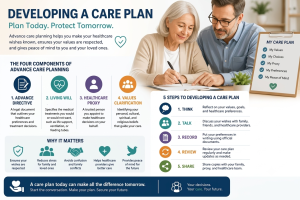
The Four Components of Advance Care Planning
Understanding the key components of advance care planning is essential when developing a care plan.
1. Advance Directive
An advance directive is a legal document that outlines your healthcare preferences and treatment decisions.
2. Living Will
A living will specifies the medical treatments you would or would not want, including life-support measures, feeding tubes, and resuscitation procedures.
3. Healthcare Proxy
A healthcare proxy is a trusted individual appointed to make healthcare decisions on your behalf if you cannot communicate your wishes.
4. Values Clarification
This involves identifying personal, cultural, spiritual, and religious beliefs that may influence healthcare decisions.
Together, these four components create a comprehensive framework for future healthcare planning.
The Five Main Components of a Care Plan
A successful care plan should include the following five key elements:
Assessment
A detailed review of the individual’s health condition, needs, and goals.
Goals and Objectives
Specific health outcomes the individual wishes to achieve.
Interventions
Actions and treatments that will be used to meet healthcare goals.
Responsibilities
Identification of healthcare providers, family members, and caregivers responsible for specific tasks.
Evaluation and Review
Regular monitoring and updates to ensure the care plan remains relevant and effective.
These components work together to create a personalized roadmap for healthcare management.
Five Steps to Developing a Care Plan
Creating an effective care plan does not have to be complicated. The process can be broken down into five simple steps:
Think
Consider your personal values, healthcare goals, and preferences for future medical treatment.
Talk
Discuss your wishes with family members, close friends, caregivers, and healthcare providers.
Record
Document your decisions in official care planning forms and legal documents.
Review
Regularly revisit your care plan to ensure it reflects your current wishes and circumstances.
Share
Provide copies of your care plan to family members, healthcare proxies, doctors, and healthcare facilities.
Following these steps helps ensure everyone involved understands your healthcare preferences.
Benefits of Advanced care planning
Developing a care plan offers numerous benefits for individuals and families. It helps avoid confusion during medical emergencies, reduces family disagreements, and ensures healthcare decisions reflect the patient’s values and wishes.
Additional benefits include:
- Improved communication between patients and healthcare providers.
- Greater confidence in healthcare decision-making.
- Reduced stress for family members.
- Better coordination of care services.
- Increased control over future medical treatment.
By planning ahead, individuals can receive care that aligns with their personal goals and beliefs.
Why Choose Professional Care Plan Development Services?
Many people understand the importance of Advanced care planning but are unsure where to start. Professional care plan development services provide guidance throughout the process, helping individuals create accurate, comprehensive, and legally compliant care plans.
Our care plan development service simplifies the process by helping clients identify their healthcare preferences, document important decisions, and communicate their wishes effectively. We work closely with individuals and families to ensure every care plan is personalized, practical, and easy to understand.
Advanced care planning is a proactive step that protects your future healthcare choices and provides peace of mind for your loved ones. Through advance care planning, individuals can clearly communicate their wishes, appoint trusted decision-makers, and ensure their values guide future medical care.
Whether you are planning for yourself, a family member, or a loved one, creating a comprehensive care plan today can make a significant difference tomorrow. Contact our team to learn more about our professional care plan development services and take the first step toward securing your healthcare future.