
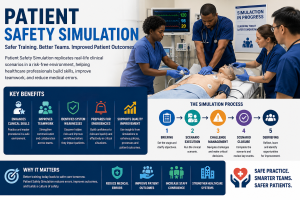
Patient safety remains one of the most important priorities in modern healthcare. Medical errors, communication breakdowns, and system failures can have serious consequences for patients and healthcare providers alike. This is where Patient Safety Simulation plays a vital role. By recreating realistic clinical scenarios in a controlled environment, healthcare professionals can practice critical skills, improve teamwork, and identify potential risks before they affect real patients.
Patient safety simulation has become an essential tool in hospitals, medical schools, and healthcare organizations worldwide. It provides a safe, effective, and evidence-based approach to training healthcare teams while enhancing the quality of care delivered to patients.
What Is Patient Safety Simulation?
Patient Safety Simulation is a healthcare training method that replicates real-life medical situations using advanced manikins, virtual reality systems, computer-based simulations, or role-playing exercises. These simulated environments allow healthcare professionals to practice procedures, decision-making, communication, and emergency response without putting patients at risk.
The goal of patient safety simulation is to improve clinical competence, strengthen teamwork, and reduce preventable medical errors. Through repeated practice and structured feedback, participants gain confidence and experience that can directly translate into safer patient care.
Benefits of Patient Safety Simulation
1. Enhances Clinical Skills
Simulation training allows healthcare professionals to develop and refine their clinical skills before performing procedures on actual patients. Trainees can practice complex tasks repeatedly until they achieve competency, reducing the likelihood of mistakes in real clinical settings.
2. Improves Team Communication
Many medical errors occur due to communication failures among healthcare teams. Patient safety simulation promotes effective communication, collaboration, and coordination among doctors, nurses, technicians, and other healthcare professionals. Teams learn how to work together efficiently during routine care and emergency situations.
3. Identifies System Weaknesses
Simulation exercises help organizations uncover hidden vulnerabilities in workflows, protocols, and equipment availability. Hospitals can identify potential safety risks such as unclear responsibilities, missing emergency supplies, or inefficient response procedures before they impact patient care.
4. Strengthens Crisis Management
Medical emergencies require quick thinking and coordinated action. Patient safety simulation prepares healthcare teams to respond effectively to critical situations such as cardiac arrests, neonatal emergencies, trauma cases, and other life-threatening events. Regular simulation training improves confidence and performance under pressure.
5. Supports Continuous Quality Improvement
Healthcare organizations can use simulation programs to evaluate existing practices and implement improvements. Lessons learned during simulation sessions contribute to safer systems, better policies, and improved patient outcomes.
How Patient Safety Simulation Works
A successful patient safety simulation program typically follows a structured process:
Briefing
Participants receive information about the learning objectives, scenario expectations, and available resources. This phase helps establish a safe learning environment and prepares learners for the simulation experience.
Scenario Execution
Healthcare professionals engage in realistic clinical situations designed to test specific skills, decision-making abilities, and teamwork competencies. Scenarios may range from routine patient care to complex emergency situations.
Challenge Management
Participants encounter challenges that require problem-solving, communication, and collaboration. These challenges mirror real-world healthcare complexities and encourage critical thinking.
Scenario Closure
The simulation concludes once the learning objectives have been addressed. Facilitators may gather performance data and observations for discussion.
Debriefing
Debriefing is widely regarded as the most important component of simulation training. Participants review their actions, discuss strengths and weaknesses, and identify opportunities for improvement. This reflective process helps transform experience into lasting learning.
Applications of Patient Safety Simulation
Patient safety simulation is used across various healthcare disciplines and settings, including:
- Medical and nursing education
- Emergency medicine training
- Surgical skills development
- Intensive care unit preparation
- Neonatal and pediatric care
- Hospital quality improvement programs
- Disaster preparedness training
- Interprofessional healthcare education
As healthcare systems continue to evolve, simulation-based learning remains a critical strategy for ensuring patient safety and professional competence.
Why Healthcare Organizations Should Invest in Patient Safety Simulation
Investing in patient safety simulation delivers measurable benefits for healthcare organizations. It helps reduce preventable errors, improves staff confidence, enhances patient satisfaction, and supports compliance with healthcare quality standards. Organizations that embrace simulation training demonstrate a strong commitment to patient-centered care and continuous improvement.
Furthermore, simulation-based education creates a culture of safety where healthcare professionals can learn from mistakes without causing harm. This proactive approach contributes to better clinical outcomes and stronger healthcare systems.
Patient Safety Simulation is transforming healthcare education by creating safe learning environments where professionals can practice, improve, and excel. From developing clinical skills to strengthening teamwork and identifying system vulnerabilities, Patient Safety Simulation plays a crucial role in reducing medical errors and improving patient outcomes.
As healthcare continues to evolve, Patient Safety Simulation will remain an essential strategy for building safer healthcare systems and delivering higher-quality patient care. Organizations that embrace simulation-based learning are investing in the future of healthcare excellence and patient safety.