
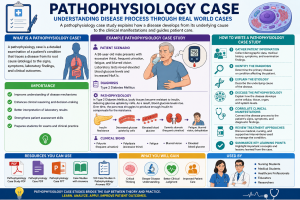
Understanding a pathophysiology case is an essential part of healthcare education. Whether you are a nursing student, medical student, or healthcare professional, studying pathophysiology cases helps you connect disease processes with clinical symptoms, laboratory findings, and patient care. By analyzing real-world scenarios, learners can better understand how diseases develop and affect the human body.
What Is a Pathophysiology Case?
A pathophysiology case is a detailed examination of a patient’s condition that explains the progression of a disease from its underlying cause to the signs and symptoms observed in the patient. It focuses on how normal physiological processes are altered by illness or injury.
A typical Disease Process Case Study includes:
- Patient history
- Presenting symptoms
- Physical examination findings
- Laboratory and diagnostic results
- Disease mechanism analysis
- Treatment considerations
- Clinical outcomes
These case studies provide a practical way to apply theoretical knowledge to real healthcare situations.
Importance of Pathophysiology Case Studies
Medical Pathophysiology Case play a critical role in healthcare education. They help students and professionals develop critical thinking skills, improve clinical judgment, and understand the relationship between disease processes and patient symptoms.
Benefits of studying pathophysiology cases include:
- Improved understanding of disease mechanisms
- Better interpretation of laboratory results
- Enhanced clinical decision-making
- Stronger patient assessment skills
- Preparation for exams and clinical practice
Many nursing and medical programs use pathophysiology case studies with answers to strengthen student learning and practical application.
Example of a Pathophysiology Case Study
Patient Scenario
A 58-year-old male presents with excessive thirst, frequent urination, fatigue, and blurred vision. Laboratory tests reveal elevated blood glucose levels and increased HbA1c.
Diagnosis
Type 2 Diabetes Mellitus
Pathophysiology
Type 2 Diabetes Mellitus occurs when body tissues become resistant to insulin, reducing glucose uptake by cells. As a result, blood glucose levels rise. Over time, the pancreas struggles to produce enough insulin to compensate for the resistance.
The elevated glucose levels cause osmotic diuresis, leading to frequent urination and dehydration. Reduced cellular glucose utilization contributes to fatigue, while prolonged hyperglycemia can affect vision and damage blood vessels.
Clinical Signs
- Polyuria (frequent urination)
- Polydipsia (excessive thirst)
- Fatigue
- Blurred vision
- Elevated blood glucose
This example demonstrates how a Clinical Disease Case Report links disease mechanisms to patient symptoms and laboratory findings.
How to Write a Pathophysiology Case Study
Writing a Disease Progression Case Study requires a structured approach. Follow these steps:
1. Gather Patient Information
Collect demographic data, medical history, symptoms, and examination findings.
2. Identify the Diagnosis
Determine the primary disease or condition affecting the patient.
3. Explain the Etiology
Describe the underlying cause of the disease, including genetic, environmental, infectious, or lifestyle factors.
4. Discuss the Pathophysiology
Explain how the disease develops at the cellular, tissue, organ, and system levels.
5. Correlate Clinical Manifestations
Connect the disease process to the patient’s signs, symptoms, and diagnostic findings.
6. Review Treatment Approaches
Discuss medical, nursing, and supportive interventions used to manage the condition.
7. Summarize Key Learning Points
Highlight important concepts and lessons learned from the case.
Finding Pathophysiology Case Study PDFs and Resources
Students often search for pathophysiology case study PDFs, Disease Progression Case Study PDFs, and pathophysiology case PPT presentations to support learning. These resources provide practical examples, disease analyses, and answer guides that help reinforce theoretical knowledge.
When selecting resources, choose materials that include:
- Detailed patient scenarios
- Evidence-based explanations
- Laboratory interpretation
- Clinical reasoning exercises
- Answer keys for self-assessment
Quality case studies can significantly improve understanding of complex disease processes and patient management strategies.
A Disease Process Case Study provides a valuable bridge between classroom learning and clinical practice. By studying real patient scenarios, healthcare students gain a deeper understanding of disease mechanisms, symptom development, and treatment strategies. Whether you are searching for pathophysiology case studies with answers, nursing examples, PDFs, or presentation materials, investing time in case-based learning can greatly improve your clinical knowledge and professional competence.