
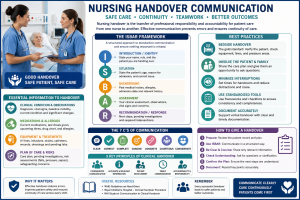
Nursing handover communication is one of the most important processes in healthcare. It involves the transfer of responsibility, accountability, and essential patient information from one nurse to another during shift changes or patient transfers. Effective nursing handover ensures continuity of care, reduces medical errors, improves patient safety, and enhances healthcare outcomes.
In today’s fast-paced healthcare environment, poor communication remains one of the leading causes of preventable adverse events. This is why healthcare institutions worldwide emphasize structured nursing handover communication using standardized frameworks such as ISBAR. By following best practices and established guidelines, nurses can provide safer, more efficient, and patient-centered care.
What Is Nursing Handover Communication?
Nursing handover communication is the systematic exchange of critical patient information between healthcare professionals. The purpose is to ensure that incoming nurses have a complete understanding of the patient’s condition, treatment plan, risks, medications, and ongoing care requirements.
A successful handover allows healthcare providers to maintain continuity of care while minimizing the risk of misunderstandings, omissions, and clinical errors. Whether performed at the bedside, during shift reports, or through electronic health records, effective communication remains essential.
Why Is Nursing Handover Important?
The importance of handover in nursing cannot be overstated. Every shift change presents a potential risk if important patient information is missed or communicated incorrectly.
Key benefits of effective nursing handover communication include:
- Improved patient safety
- Reduced medication errors
- Better continuity of care
- Enhanced teamwork among healthcare professionals
- Improved patient satisfaction
- Faster clinical decision-making
- Better risk identification and management
- Increased accountability and professional responsibility
When nurses communicate clearly and accurately during handovers, patients receive safer and more consistent care.
The ISBAR Framework for Nursing Handover
One of the most widely used nursing handover tools is the ISBAR framework. This structured communication method helps ensure that all critical patient information is transferred consistently.
I – Introduction
Introduce yourself, your role, and identify the patient.
S – Situation
Explain the patient’s current condition, reason for admission, and immediate concerns.
B – Background
Provide relevant medical history, allergies, previous treatments, and admission details.
A – Assessment
Share your clinical assessment, observations, vital signs, and any concerns about the patient’s condition.
R – Recommendation
Outline the next steps, required interventions, pending investigations, and ongoing monitoring needs.
Using ISBAR helps standardize communication and reduces the likelihood of missing important information during handovers.
Best Practices for Effective Nursing Handover Communication
Healthcare organizations recommend several best practices to improve handover quality and patient outcomes.
1. Conduct Bedside Handover
Bedside handover allows incoming nurses to visually assess the patient, verify information, inspect equipment, and involve patients in their care plans.
2. Involve Patients and Families
Patient-centered care encourages patients and family members to participate in discussions regarding treatment plans and healthcare goals.
3. Minimize Interruptions
A quiet environment with minimal distractions helps ensure accurate information transfer during shift changes.
4. Use Standardized Checklists
Nursing handover checklists ensure consistency and help nurses remember essential patient information.
5. Document Accurately
Proper nursing handover notes support verbal communication and provide a reliable record for future reference.
Essential Information to Include in Nursing Handover
A complete nursing handover should always include:
Clinical Condition
- Current diagnosis
- Vital signs
- Baseline observations
- Mobility status
Medications and Allergies
- Current medications
- Recent doses administered
- Known allergies
- Upcoming medication schedules
Treatments and Equipment
- IV lines and infusions
- Wounds and dressings
- Drains and catheters
- Medical devices and monitoring equipment
Care Plan and Risks
- Pending investigations
- Patient risk assessments
- Safeguarding concerns
- Required nursing interventions
Providing comprehensive information helps maintain continuity of care and reduces avoidable errors.
The 7 C’s of Communication in Nursing
Effective nursing communication is often guided by the 7 C’s:
- Clear
- Correct
- Complete
- Concise
- Concrete
- Courteous
- Considerate
Applying these principles during handovers promotes accurate information exchange and strengthens patient safety.
The 5 Key Principles of Clinical Handover
Healthcare professionals should follow these five principles:
- Standardized communication
- Accurate and relevant information sharing
- Patient involvement
- Timely communication
- Accountability and responsibility
These principles form the foundation of effective clinical handover practices.
Nursing handover communication is a critical component of safe, high-quality healthcare. By using structured frameworks such as ISBAR, conducting bedside handovers, involving patients, and following established communication principles, nurses can significantly improve patient outcomes and reduce clinical risks.
As healthcare continues to evolve, effective nursing handover communication remains essential for ensuring continuity of care, enhancing teamwork, and maintaining the highest standards of patient safety. Every successful handover contributes to better healthcare experiences and improved patient outcomes.