
In modern healthcare, developing care plan is one of the most essential skills for nurses because it ensures patients receive structured, safe, and individualized care. A strong developing care plan is built on accurate assessment and the correct use of nursing diagnosis, which guides all nursing interventions and expected outcomes. Without proper developing care plan steps, patient care can become unorganized and less effective.
This article explains nursing diagnosis, its types, examples, and how it connects directly to developing care plan in clinical practice. It is also designed to help learners understand how developing care plan improves patient outcomes and supports professional nursing standards.
What is Nursing Diagnosis in Developing Care Plan?
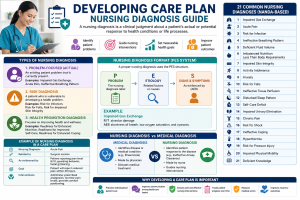
A nursing diagnosis is a clinical judgment made by a nurse about a patient’s response to health conditions or life processes. In developing care plan, nursing diagnosis becomes the foundation for decision-making and intervention planning.
During developing care plan, nurses identify patient problems such as pain, infection risk, breathing difficulties, or anxiety. These problems are not the disease itself but how the patient is responding to it.
For example, pneumonia is a medical diagnosis, but “Impaired Gas Exchange” is a nursing diagnosis used in developing care plan to guide nursing actions.
A strong developing care plan ensures every nursing diagnosis is based on accurate assessment data and patient needs.
Types of Nursing Diagnosis Used in Developing Care Plan
When developing care plan, nurses use different types of nursing diagnoses depending on the patient’s condition:
1. Problem-Focused (Actual Diagnosis)
This is used when a patient already has a health problem. In developing care plan, it identifies current issues such as pain, infection, or breathing difficulty.
Example:
- Ineffective Breathing Pattern
- Acute Pain
2. Risk Diagnosis
This type identifies potential problems that may occur. In developing care plan, risk diagnoses help prevent complications.
Example:
- Risk for Infection
- Risk for Falls
3. Health Promotion Diagnosis
This focuses on improving health and wellness. In developing care plan, it encourages patients to improve lifestyle and health behaviors.
Example:
- Readiness for Enhanced Nutrition
- Readiness for Improved Self-Care
Using these categories ensures developing care plan is comprehensive and patient-centered.
Nursing Diagnosis Format in Developing Care Plan (PES Model)
In developing care plan, nurses often use the PES format:
- P (Problem): The nursing diagnosis label
- E (Etiology): Related factors or causes
- S (Symptoms): Evidence or signs and symptoms
Example used in developing care plan:
Impaired Gas Exchange r/t alveolar-capillary membrane changes AEB shortness of breath, low oxygen saturation, and cyanosis.
This structured approach ensures that developing care plan is accurate and evidence-based.
Examples of Nursing Diagnosis in Developing Care Plan
Here are common examples used in developing care plan:
- Impaired Gas Exchange
- Acute Pain
- Ineffective Airway Clearance
- Risk for Infection
- Imbalanced Nutrition: Less Than Body Requirements
- Anxiety
- Impaired Physical Mobility
- Risk for Falls
Each of these helps nurses create a structured developing care plan that targets specific patient needs.
What Are 5 Nursing Diagnoses?
In developing care plan, five common nursing diagnoses include:
- Acute Pain
- Risk for Infection
- Ineffective Breathing Pattern
- Impaired Physical Mobility
- Anxiety
These are frequently used in hospitals during developing care plan because they apply to many patient conditions.
What Are the 4 Types of Nursing Diagnosis?
During developing care plan, the four commonly recognized categories include:
- Problem-Focused Diagnosis
- Risk Diagnosis
- Health Promotion Diagnosis
- Syndrome Diagnosis
Each type strengthens the structure of developing care plan and improves nursing accuracy.
What Are 21 Nursing Problems?
In developing care plan, nursing problems refer to common patient responses such as:
- Pain
- Fever
- Infection risk
- Anxiety
- Fatigue
- Sleep disturbance
- Dehydration
- Poor nutrition
- Impaired mobility
- Breathing difficulty
- Skin breakdown
- Nausea
- Vomiting
- Constipation
- Diarrhea
- Fear
- Stress
- Confusion
- Low self-esteem
- Ineffective coping
- Risk for injury
These problems are essential when developing care plan because they guide nursing priorities.
Nursing Diagnosis vs Medical Diagnosis in Developing Care Plan
A key part of developing care plan is understanding the difference between nursing and medical diagnosis:
- Medical Diagnosis: Identifies disease (e.g., pneumonia, diabetes)
- Nursing Diagnosis: Identifies patient response (e.g., Ineffective Airway Clearance)
In developing care plan, nurses focus on patient responses, not just the disease. This helps deliver holistic and individualized care.
Importance of Nursing Diagnosis in Developing Care Plan
The success of developing care plan depends on accurate nursing diagnosis because it:
- Guides nursing interventions
- Improves patient safety
- Ensures personalized care
- Supports communication among healthcare teams
- Enhances clinical decision-making
Without proper developing care plan, patient outcomes may be inconsistent or ineffective.
Why Developing Care Plan Matters in Nursing Practice
Developing care plan is not just a documentation process; it is a clinical roadmap. It ensures nurses can prioritize care, track progress, and evaluate outcomes effectively.
A strong developing care plan helps:
- Reduce medical errors
- Improve recovery rates
- Standardize nursing practice
- Strengthen critical thinking skills
In nursing education and practice, mastering developing care plan is essential for professional growth.
Frequently Asked Questions (FAQ)
1. What is a nursing diagnosis?
A nursing diagnosis is a clinical judgment about a patient’s response to health problems used in developing care plan.
2. What are examples of nursing care diagnosis?
Examples include pain, infection risk, and impaired mobility used in developing care plan.
3. What is NANDA nursing diagnosis?
It is a standardized classification system used globally in developing care plan.
4. Why is nursing diagnosis important?
It ensures structured and effective developing care plan for better patient outcomes.
In conclusion, developing care plan is a critical process in nursing that relies heavily on accurate nursing diagnosis. From identifying patient problems to selecting interventions, every step of developing care plan improves patient care quality and safety.
Understanding Nursing diagnosis types, examples, and formats strengthens clinical decision-making and ensures that developing care plan remains effective, structured, and patient-centered.
If you want better nursing outcomes and professional practice, mastering developing care plan is essential for every nurse and healthcare student.